Monday, 14 April 2014

Apr. 14 – pH Lab Activity

Today we conducted the pH Lab!  We used pH paper and cabbage juice to measure the pH of various household products.  We also investigated two mystery chemicals, one of which was hydrochloric acid (HCl)!  Were you able to tell which one it was?
Work on the questions in the application part of the lab and hand it in tomorrow.

Friday, 11 April 2014

Apr. 11 – pH Scale

Today I finally got the Smart Board working!  Here are the exciting notes we took as a class:


Handout


Here are some examples of Acid-Base indicators:


We will be using some of these indicators on Monday!  Bring substances from home that you would like to test.

Thursday, 10 April 2014

Apr. 10 – Acids and Bases


Today we began talking about Acids and Bases.

What's an acid?  What is a base?  Have a look at the notes here:
Here are some common household items that are either acids or bases.


They have some similar and some very different properties.  We completed a Venn diagram of the similarities and differences of acids and bases.

What this video of what some powerful acids and bases can do to coke cans:


We then guessed if some substances were acids or bases:

Acid or Base?

 - tomato juice (acid)
 - cough syrup (base)
 - oven cleaner (base)
 - water (neutral)
 - blood (mostly neutral)
 - seawater (base)
 - coffee (acid)
 - saliva (neutral)
 - hair bleach (base)
 - vinegar (acid)
 - baking soda (base)

Wednesday, 9 April 2014

Apr. 9 – Conservation of Mass Lab

Today we completed some questions and analysis on the Conservation of Mass Lab that we completed yesterday.

Here is the handout in case you don't have it:
This version is updated with the applications questions on the last page.  If you are not done, you should complete it and hand it in Tomorrow.

Unit Test

We are almost done the chemistry unit and that means a unit test is coming up.
  • The test will be on Wednesday, Apr. 23.
Start reviewing early!

Monday, 7 April 2014

Apr. 7 – Lab Prep

Today we discussed the lab activity that we will do tomorrow.

Handouts
Remember all our discussion about safety precautions.  I will expect you to treat safety as the first priority when we are conducting the lab.


We then went through the lab procedures together to ensure that you understand the topic we are investigating.  During a chemical reaction we expect mass to be conserved throughout.  This means the total mass of the products is the same as the reactants.  We will investigate if this is true when we perform a reaction in a closed container and in an open container.

We took some time to write down our hypothesis.

Then we looked at the procedures to make sure that you are familiar with all the equipment we will be using.

Here's the setup for part A of the lab.

Finally, we discussed how to describe the appearance of chemical solutions.  Try describing milk and water using the proper terminology.  Which one is transparent or opaque?  Which one is colourless or white?  Which one is more viscous?   Which one is liquid?
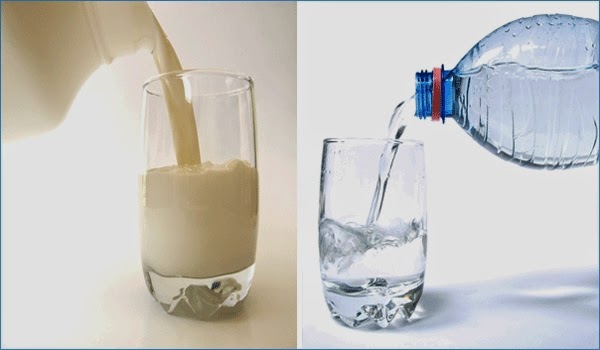
We practiced by describing milk and water.

Be prepared to conduct the lab tomorrow!

Friday, 4 April 2014

Apr. 4 – More on Balancing Equations

Today we continued with yesterdays work:
This is a very difficult procedure, so don't be discouraged if you don't get it right away.  Take your time and go through it using the steps I showed you in class.

Thursday, 3 April 2014

Apr. 3 – Balancing Equations

Today we talked about the Conservation of Mass.

Have a look at this video:


The cat turns into their teacher!  This is magical because of many reasons, but one thing is that the woman is much bigger than the class.  She has much more mass.  In real life, mass does not change in a chemical reaction.  The mass of the reactants are the same as the mass of the products.

We talked about what this means when it comes to chemical equations: the number of atoms in the reactants is equal to the number of atoms in the products.

This means we have to adjust chemical equations to make them balanced.  I showed some examples and a method of how to balance them.

Handout